

Biofuel production and consumption have fluctuated over the past century, dating back to when Henry Ford’s Model T could run on ethanol. Although biofuels have periodically declined in popularity, the Renewable Fuel Standard in the U.S., implemented in 2007, sparked a renewed phase of building biofuel production facilities. Biofuel production also supports the demand for agricultural commodities, including corn, wheat, soybeans, and canola.
In both Canada and the U.S., biofuels compete with gasoline, diesel, and jet fuel. While these fossil fuel markets are well supplied, blending biofuels can improve fuel quality and reduce greenhouse gas emissions. U.S. biofuel policies play a large role in determining where Canadian biofuels are consumed and which feedstocks are used.
Canada’s Ethanol Growth Driven by Imports
Ethanol is often blended into gasoline to improve octane ratings and remain cost-competitive with conventional fuel.
Through May, Canadian ethanol production fell by 1% from last year. However, output has grown 14% since 2021 due to improved efficiency. This means more ethanol is produced per tonne of grain, and total grain use increased by 8% over the same period.
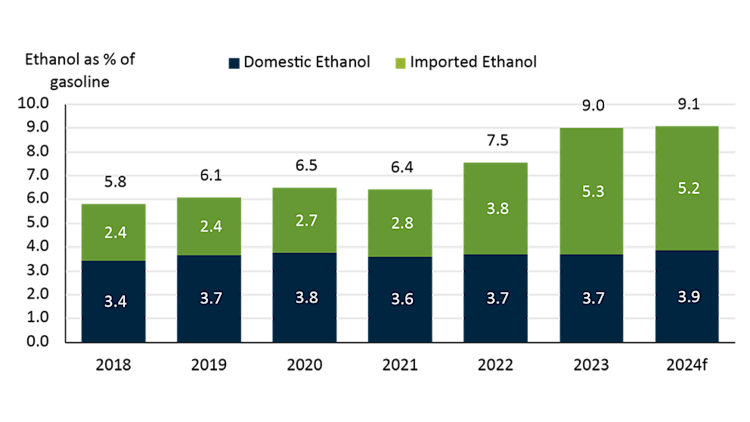
Last year, ethanol made up 9.1% of the gasoline pool in Canada. This means there was, on average, 0.091 litres of ethanol in each litre of gasoline. Since 2018, Canada’s share of ethanol in gasoline has stayed around 3.9%, with imports from the U.S. filling the gap. Over 5% of blended ethanol now comes from American sources.
Figure 1: Growth of ethanol’s share in Canadian gasoline is increasingly coming from imports
Sources: USDA Foreign Agricultural Service GAIN, FCC Economics
Because Canadian ethanol plants cannot meet growing demand, Canada continues to rely on imports. Canada’s Clean Fuel Regulations require gasoline to reduce carbon intensity until 2030, which will drive additional ethanol demand. If Canadian production doubled, the country would still depend on imports and require an extra 4 million tonnes of grain.
Biodiesel and Renewable Diesel: Canada’s Market Darlings
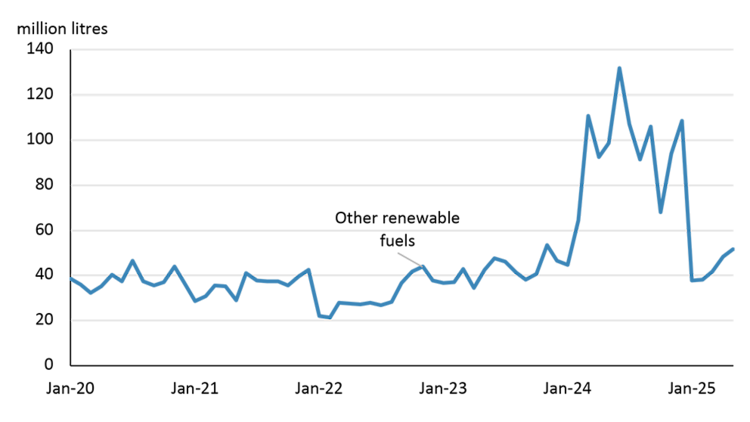
Canada’s biodiesel and renewable diesel facilities have experienced significant market volatility. Domestic production rose last year in the “other renewable fuels” category, as two new renewable diesel plants came online.
Figure 2: Canada’s biodiesel and renewable diesel production fluctuates with U.S. policy
Sources: Statistics Canada, FCC Economics
Early this year, both U.S. and Canadian facility run rates declined due to uncertainty over the U.S. blender tax credit. Changes in the U.S. biofuel tax credit now grant incentives at the producer level, excluding Canadian imports. This reduces opportunities for Canadian biodiesel and renewable diesel exports.
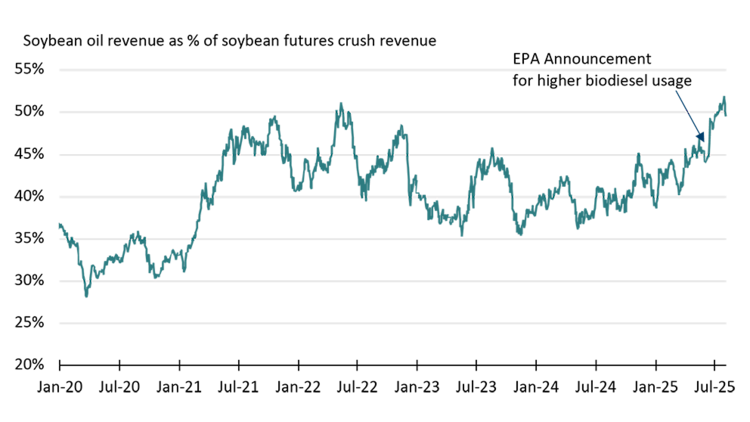
Canada exports more vegetable oil—mainly canola—to the U.S. for biofuel production than it uses domestically. Over the past year, Canada used just over 1 million tonnes for its own production but exported 2.8 million tonnes. Domestic producers are watching policy changes closely for new opportunities.
Figure 3: Soybean oil revenue as a % of soybean crush revenue hit a 5-year high on the EPA announcement
Sources: Barchart, CME Futures, FCC Economics
Emerging Market: Sustainable Aviation Fuel (SAF)
Sustainable Aviation Fuel (SAF) is produced using similar methods to renewable diesel and must be compatible with existing aircraft engines. Several U.S. facilities are increasing SAF production, while Canada does not yet have operational plants. SAF represents a potential growth market for Canadian oilseed producers.
Bottom line
U.S. biofuel policies continue to shape Canada’s ethanol, biodiesel, and renewable diesel markets. While these policies may reduce demand for Canadian exports, they also create new opportunities for Canadian agricultural producers. Emerging markets like SAF offer potential growth, although domestic production remains in the early stages. Canadian oilseed producers should continue monitoring U.S. regulations to align production and exports with evolving demand.
Discover more about Ontario farms and related resources at OntarioFarmsForSale.com
Originally written by Justin Shepherd; revised and adapted for this publication.
U.S. Biofuel Policy Impact on Canada: Implications for Canadian Agriculture and Energy https://www.fcc-fac.ca/en/knowledge/economics/us-policy-impacting-biofuel-potential-canada September 2025